
Concrete Driveway Maintenance Tips for Johns Creek Homeowners
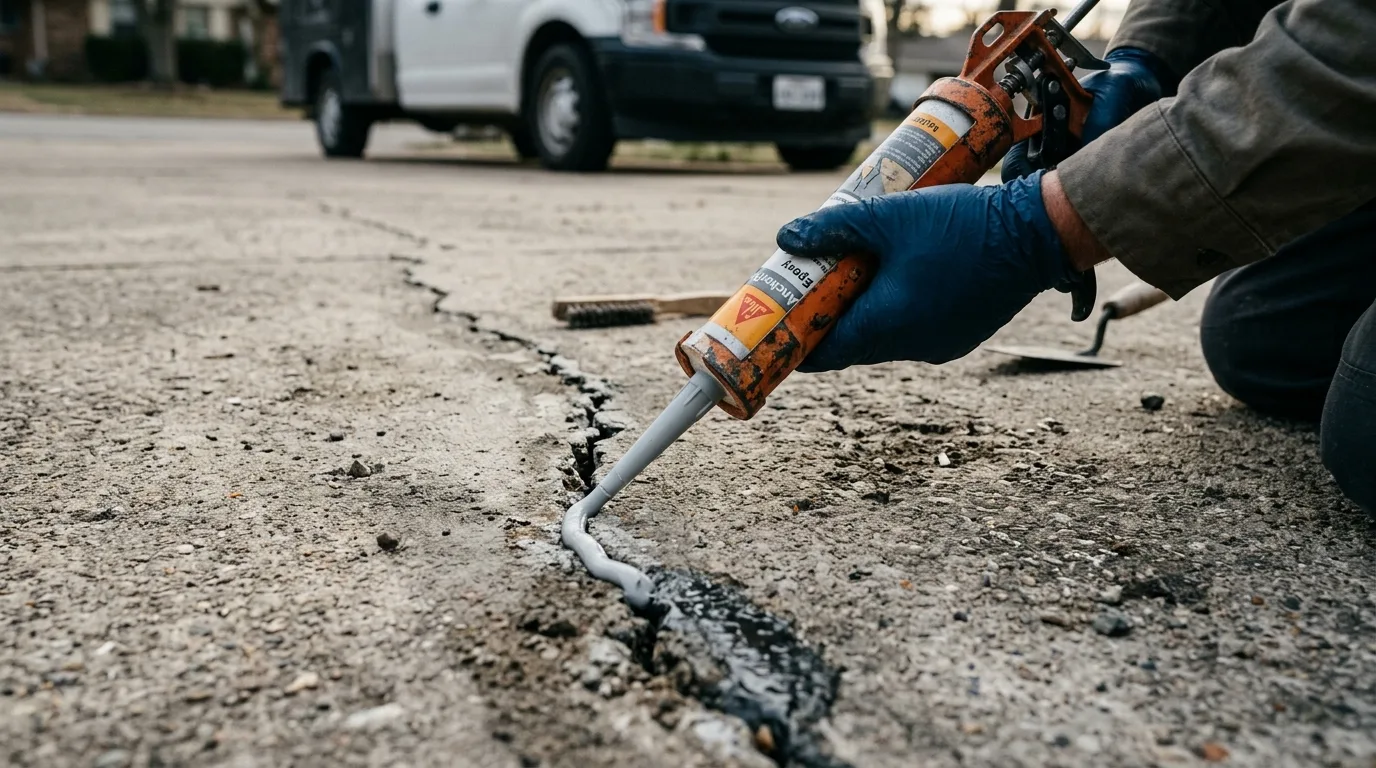
A concrete driveway in Johns Creek can last 35–40 years with basic maintenance or 15–20 years without it. The difference isn’t complicated — it’s a sealing schedule and early crack response that prevents the chain of events that eventually forces expensive replacement. Understanding specifically what Johns Creek’s climate and soil conditions demand helps you maintain concrete effectively rather than following generic national guidance that misses Georgia’s specific challenges.
In this post, we cover the maintenance schedule that extends concrete driveway life in Georgia’s climate, how to monitor for early damage, what products work in Fulton County’s conditions, and when professional attention is warranted.
Concrete Driveway Maintenance and Repair in Johns Creek
From resealing to crack repair — we help Johns Creek homeowners protect their concrete investment.
Why Concrete Maintenance in Johns Creek Is Different
Generic concrete maintenance advice talks about sealing every three to five years and watching for cracks. For Johns Creek, two factors make that guidance insufficient.
First, Georgia’s summer UV intensity accelerates sealer degradation significantly compared to northern markets. The average July temperature reaches 89°F with intense solar radiation — sealers on south-facing or fully exposed driveways in the Rivermont and St. Ives communities can fail in 18–24 months rather than three to five years. The right sealing interval in Johns Creek is driven by the actual condition of the sealer, not a fixed calendar schedule.
Second, Fulton County’s clay soil means cracks need monitoring and early treatment — not because surface cracking is unusual, but because cracks that allow water penetration into Johns Creek’s clay sub-base accelerate the very soil movement that created the crack in the first place. A crack that’s addressed at quarter-inch width costs $50–$100 to fill. The same crack at half-inch width with eroded sub-base beneath it costs $500–$2,000 to repair correctly.
Sealing: The Most Important Maintenance Step
A penetrating concrete sealer does two things that matter in Johns Creek’s climate: it locks surface moisture variation by preventing water absorption into the slab, and it provides UV protection that prevents the cement paste deterioration (surface scaling and spalling) that Georgia’s sun drives in unsealed concrete.
For Johns Creek driveways, the recommended sealing schedule is:
- New concrete: first seal at 28 days minimum after pour, when concrete reaches full cure strength
- Ongoing: reseal when water no longer beads on the surface — typically every 18–36 months depending on sun exposure and traffic
Use a penetrating silane-siloxane sealer for standard driveways rather than topical acrylic sealers. Penetrating sealers work below the surface and don’t create a film that can peel, trap moisture, or become slippery when wet — all issues with film-forming sealers in Georgia’s wet seasons. For stamped concrete driveways, a UV-stable acrylic sealer is the standard choice because it enhances color and provides the surface protection that stamped patterns require.
Crack Monitoring
The most effective maintenance strategy for Johns Creek driveways is early crack identification followed by immediate response. Establish a habit of inspecting your driveway each spring and fall — these are the seasons when temperature changes and Georgia’s rainfall patterns make any new cracking most visible.
What to look for: new cracks that weren’t present previously, existing hairline cracks that have widened, and any displacement between crack edges (one side higher or lower than the other). Photograph cracks with a ruler in the frame so you can track width changes over time. A crack that is stable and hairline-width for two to three inspection cycles is low priority. A crack that grew from hairline to 3/16 inch in one season indicates active movement and warrants professional evaluation.
Cleaning: How and When
Concrete driveways in Johns Creek accumulate Georgia’s red clay staining, oil drips, tire marks, and organic staining from falling leaves and tree sap in wooded neighborhoods. Annual pressure washing removes surface contamination that, if left, can penetrate the sealer and accelerate surface deterioration.
Use a pressure washer at 2,000–3,000 PSI with a surface cleaner attachment for flat work — a direct-stream wand creates etching patterns at that pressure. For oil stains, apply a commercial degreaser before pressure washing. For red clay staining (common near landscaping edges in Doublegate and Oxford Mill), an oxalic acid-based cleaner removes iron oxide staining better than general concrete cleaners. Rinse thoroughly and allow the surface to dry completely before reapplication of any sealer.
Professional Concrete Maintenance Services in Johns Creek
Crack filling, resealing, and cleaning for driveways throughout Johns Creek and Fulton County.
Practical Maintenance Tasks
- Spring inspection: After Georgia’s winter-spring transition, inspect for any freeze-related surface spalling (rare in Johns Creek but possible after hard freezes) and any new cracking from winter clay contraction.
- Annual cleaning: Pressure wash to remove clay staining, organic material, and surface contamination before inspecting crack condition.
- Sealer condition test: Pour water on the surface — if it absorbs rather than beading, the sealer has failed and reapplication is needed.
- Control joint maintenance: Control joints should be filled with a flexible polyurethane sealant that accommodates movement rather than left open or filled with rigid material. Inspect and refill as needed every five to seven years.
- Edge drainage management: Keep the edges of your driveway clear of soil and mulch buildup that traps moisture against the slab edge — a common problem in Johns Creek’s landscaped neighborhoods where mulch beds border driveways.
- Tree root monitoring: Large trees adjacent to driveways in Medlock Bridge and The Falls of Autry Mill can produce root intrusion beneath the slab over decades. If sections are heaving in a pattern consistent with tree root location, address it before it compromises a large section.
When to Call a Professional
DIY maintenance handles sealing, cleaning, and small crack fills. Professional attention is warranted when:
Cracks are wider than a quarter-inch, growing in width, or showing displacement between edges. Sections have shifted elevation by more than a quarter-inch relative to adjacent panels. Spalling covers more than a few isolated areas. Water is pooling on the surface or near the foundation rather than draining away correctly.
Early professional intervention on these conditions typically costs far less than deferred repair. See our 5 signs your driveway needs replacing for guidance on when repair is no longer the right answer.
Frequently Asked Questions
How often should I seal my concrete driveway in Johns Creek?
Test annually by pouring water on the surface — when it absorbs rather than beads, it’s time to reseal. In practice, most Johns Creek driveways with significant sun exposure need resealing every 18–24 months. Driveways in heavy shade may go 36–48 months between sealings. A regular testing habit is more accurate than a fixed calendar schedule for Georgia’s variable sun exposure conditions.
What sealer should I use for a Johns Creek driveway?
For standard broom-finish concrete driveways, use a penetrating silane-siloxane sealer. It provides lasting water repellency and UV protection without creating a surface film that can peel or become slippery. For stamped concrete driveways, use a UV-stable acrylic sealer per the manufacturer’s specification for your specific stamped product. Avoid water-based sealers with low solids content — they perform poorly in Georgia’s UV conditions and require more frequent reapplication. Our concrete driveway service page covers maintenance recommendations specific to each finish type.
Can I fill driveway cracks myself?
Yes for hairline to 1/8-inch cracks — use a polyurethane concrete crack filler from a concrete supplier (not a general hardware store variety) that specifies flexible performance after cure. Clean the crack thoroughly with compressed air before filling. For cracks wider than 3/16 inch, get a professional assessment before filling — those cracks may indicate sub-base movement that needs evaluation before surface treatment.
Concrete Driveway Repair and Maintenance in Johns Creek
From crack filling to full replacement — free estimates from Johns Creek Concrete Contractors at (888) 376-0955.
Related: